

 by Casacito
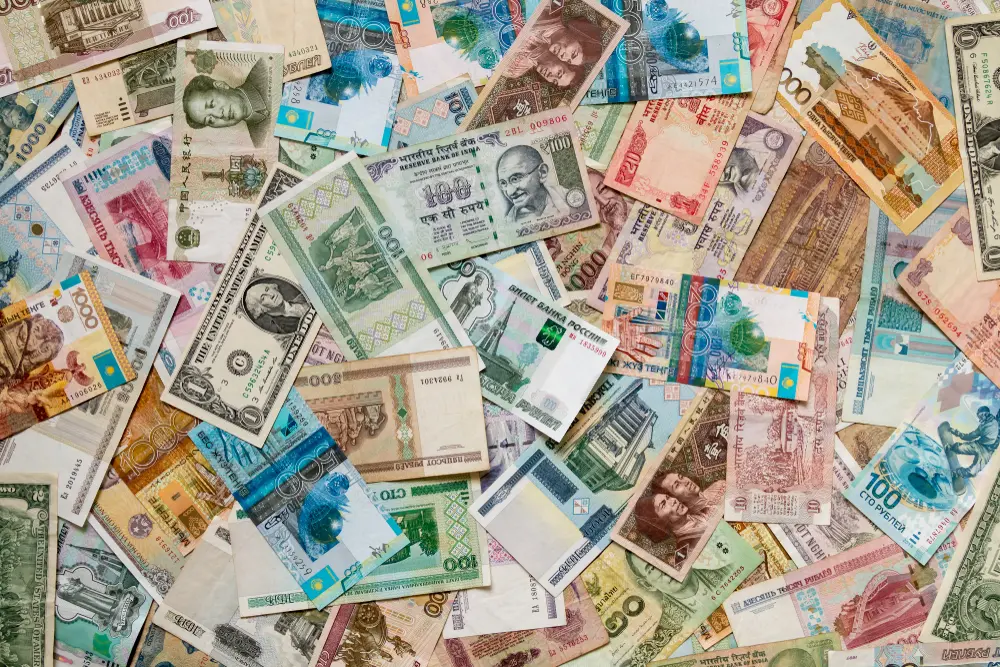
In today’s globalized economy, cross border real estate transactions have become increasingly common, especially across the African continent where foreign direct investment and diaspora remittances often fuel property markets. However, currency fluctuations, the rise and fall in the value of one currency against another, play a pivotal role in shaping the outcomes of these international property deals. In the African context, where many countries operate within volatile monetary systems and rely heavily on foreign exchange, the impact of currency fluctuations is particularly pronounced.
EXCHANGE RATE VOLATILITY: THE CRUX OF UNCERTAINTY
Exchange rate volatility creates a layer of uncertainty in real estate transactions involving foreign buyers or investors. In Africa, where currencies such as the Nigerian naira, Ghanaian cedi, or Zimbabwean dollar often experience sharp devaluations or erratic fluctuations, real estate values measured in local currency can dramatically shift in a short period. For example, a property priced at 100 million naira may appear affordable to a U.S. based buyer at a conversion rate of ₦500 to $1, costing $200,000. But if the naira suddenly devalues to ₦700 to $1, the same property now costs just over $142,000, a significant discount or conversely a loss for the seller.
CAPITAL FLIGHT AND INVESTOR CAUTION
Due to unpredictable currency movements, foreign investors often approach African markets with caution. The risk that rental incomes or capital gains will be eroded by currency depreciation discourages long term commitments. For instance, a South African investor considering a development project in Mozambique might be deterred by the risk of the Mozambican metical weakening significantly against the rand, potentially wiping out profits when funds are repatriated.
Additionally, currency instability often fuels capital flight where local investors and elites purchase foreign properties as a hedge against local economic volatility. This trend is especially common in countries facing inflation or political unrest such as Sudan or the Democratic Republic of Congo, where affluent individuals often buy property in South Africa, Dubai, or Europe to preserve value.
LEGAL AND REGULATORY CHALLENGES UNDER AFRICAN FRAMEWORKS
Within African standards, cross border real estate transactions are further complicated by fragmented regulatory regimes and lack of currency harmonisation. The absence of a unified monetary system, unlike the eurozone, means investors must navigate multiple exchange regimes. For example, the West African CFA franc used in countries like Senegal and Ivory Coast offers more stability due to its peg to the euro, which attracts more consistent investment. In contrast, East African currencies tend to float independently, leading to greater exposure to global currency pressures.
Moreover, some African governments impose exchange controls, limiting the amount of foreign currency individuals can remit or repatriate. Nigeria’s Central Bank, for instance, has historically placed tight restrictions on U.S. dollar availability, complicating the process for foreign property buyers to transfer funds or repatriate profits. These controls, while aimed at safeguarding local currency reserves, act as barriers to international real estate investments.
DIASPORA INVESTMENT: A DOUBLE-EDGED SWORD
African diasporas, particularly in Europe and North America, are major players in cross border property investment. Many remit funds to build homes or invest in family-owned properties. While this injects capital into domestic markets, diaspora investors often grapple with the risk of sending foreign currency during periods of exchange rate instability. For instance, a Kenyan in the UK may delay purchasing a property in Nairobi if the shilling begins to depreciate rapidly, awaiting a more favourable exchange rate.
Conversely, those who act swiftly during depreciation can secure properties at a lower dollar or pound equivalent. This arbitrage opportunity often leads to speculative buying, inflating property prices in urban centres like Accra, Lagos, or Kigali, sometimes pricing out locals and exacerbating housing affordability issues.
MITIGATION AND ADAPTIVE STRATEGIES
To navigate currency risks, investors and developers across Africa increasingly adopt hedging strategies. Forward contracts and currency swaps, although more common in developed markets, are slowly gaining traction among sophisticated African financial institutions. Furthermore, pegging real estate prices to stable foreign currencies, such as pricing homes in U.S. dollars in prime Kenyan or South African developments, offers a buffer against domestic currency volatility.
Additionally, regional cooperation under bodies like the African Continental Free Trade Area (AfCFTA) holds promise. A unified African market could eventually lead to harmonised financial standards and perhaps even a regional currency bloc, reducing the exposure of real estate transactions to cross currency fluctuations.
IN CONCLUSION
Currency fluctuations wield profound influence over cross border real estate transactions in Africa, acting as both a gateway and a gatekeeper to foreign investment. While they present opportunities for savvy investors, they also carry significant risks, especially in nations with volatile currencies and weak monetary frameworks. As African economies strive for greater stability and integration, mitigating currency risks through prudent financial planning, regulatory reform, and regional cooperation will be essential in unlocking the full potential of the continent’s real estate sector.
Photo: Getty Images